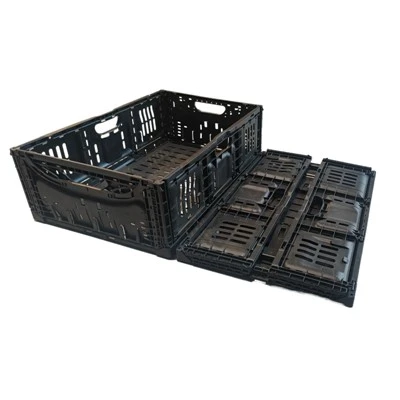
In recent years, black plastic crates have become increasingly prevalent across various industries, from agriculture and food distribution to logistics and retail. Known for their durability, lightweight nature, and stackability, these crates offer a practical solution for transporting and storing goods efficiently. However, alongside their widespread use, concerns about environmental sustainability and recycling practices have also come to the forefront.
Black plastic crates are typically made from high-density polyethylene (HDPE) or polypropylene (PP), materials chosen for their strength, resistance to impact, and ease of cleaning. This makes them ideal for repeated use in demanding environments such as farms, warehouses, and retail outlets. Their uniform size and shape allow businesses to optimize space during transportation and storage, reducing costs and streamlining supply chain operations.
One of the key advantages of black plastic crates over traditional wooden or cardboard containers is their longevity. Unlike cardboard, which can weaken or break down when exposed to moisture, plastic crates can endure harsh weather conditions and heavy handling without significant deterioration. This reusability translates into fewer disposable containers consumed, aligning with broader corporate goals for sustainability.
Despite these benefits, black plastic crates also present significant environmental challenges. The production of plastic, which relies on fossil fuels, contributes to carbon emissions and resource depletion. Additionally, not all black plastic crates are recyclable; the dark coloration makes it difficult for recycling facilities to detect and sort these materials effectively, often resulting in them being discarded in landfills. This highlights the importance of developing better recycling technologies and encouraging the use of recycled materials in crate manufacturing.
In response, some manufacturers are exploring innovative approaches to mitigate environmental impact. These include producing crates from recycled plastics, improving design for easier disassembly and recycling, and developing biodegradable alternatives that retain the necessary durability. Governments and industry bodies are also implementing regulations and standards to promote responsible usage and disposal practices.
The role of black plastic crates during the COVID-19 pandemic underscored their importance in maintaining supply chain resilience. As demand for packaged goods surged, these crates enabled safe, efficient handling and distribution, helping to prevent shortages in critical sectors such as food and medical supplies. This demonstrated their indispensable role but also reinforced the need for sustainable lifecycle management.
Looking ahead, consumers and businesses alike are increasingly prioritizing environmental considerations in their purchasing decisions. The challenge remains to balance functionality, cost, and ecological responsibility in the choice of packaging solutions. Black plastic crates, with their proven utility, will continue to play a vital role, provided that advancements in recycling and material science keep pace with growing environmental demands.
In summary, black plastic crates exemplify the intersection of practical logistics needs and environmental stewardship. Their durability, efficiency, and cost-effectiveness make them a staple in modern supply chains, while ongoing innovations seek to address the drawbacks associated with plastic waste. As the push for sustainability gains momentum globally, the evolution of black plastic crates will be an important marker in the journey toward more eco-friendly industrial practices.
 English
- English
- Français
- Deutsch
- 日本語
- Italiano
- Español
- Português
- русский
- 한국어
- اردو
- Melayu
- हिंदी
- עברית
- Norsk
- Ελληνικά
- România limbi
- Polski
- Svenska
- Bai Miaowen
- Latviešu
- Eesti
- Việt Nam
- فارسی
- Čeština
- magyar
- Türkçe
- বাংলা
- dansk
- slovenščina
- bosanski
- slovenčina
- íslenska
- suomi
- Malti
- українська
- ไทย
- Nederlands
- Gaeilgenah Éireann
- عربي
- Indonesia
- Cymraeg
- hrvatski
- Български
- Kreyòl Ayisyen
- Català
- Lietuvių