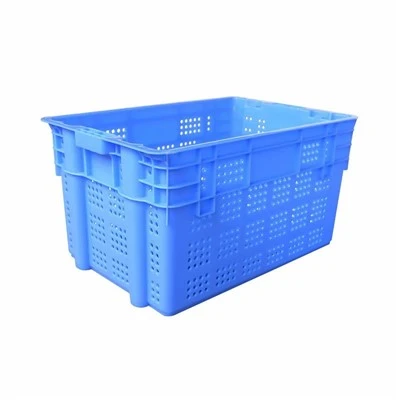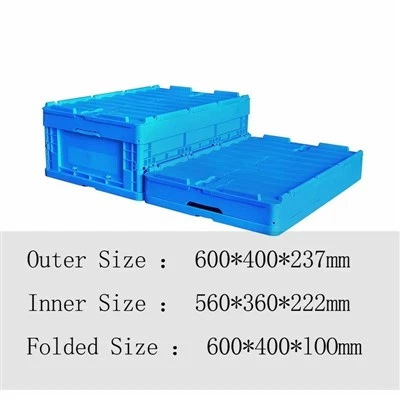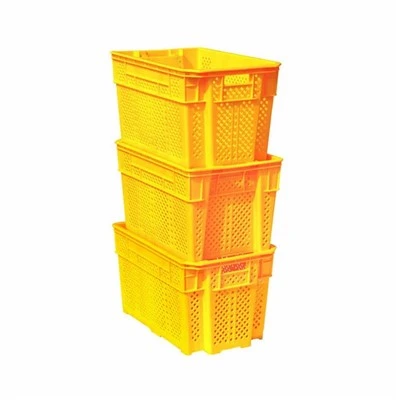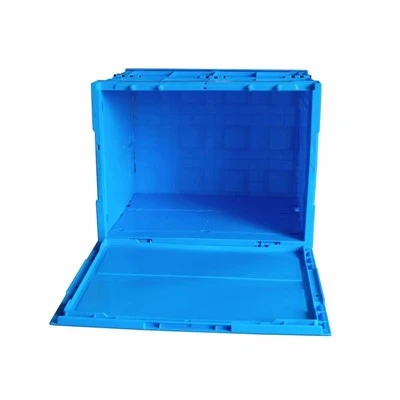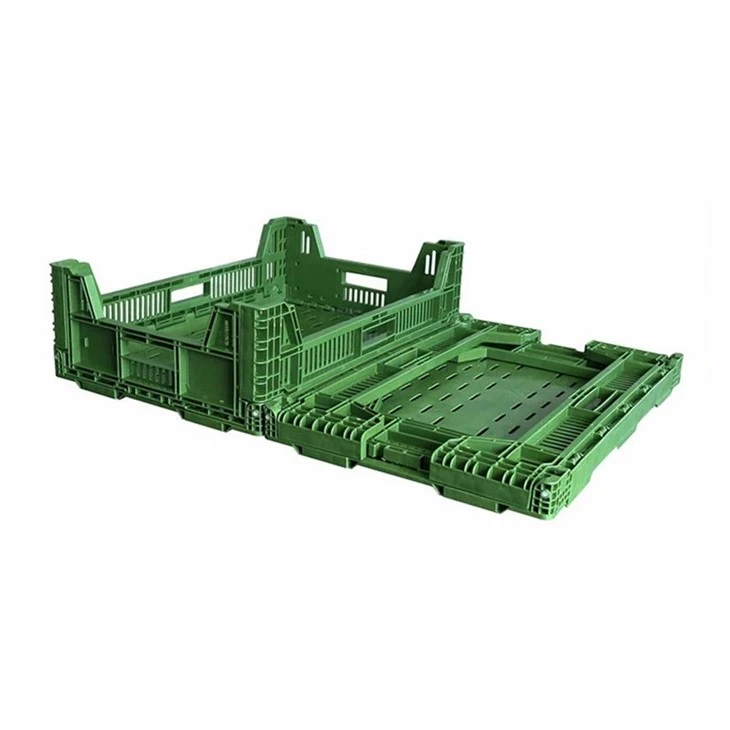
Heavy-Duty, Stackable, and Nestable Containers for Automated Material Handling & Supply Chain Logistics
Industrial plastic tote boxes provide standardized material handling, Work-In-Progress (WIP) transport, and automated storage solutions. Molded from high-density polyethylene (HDPE) or impact-resistant polypropylene (PP), these containers withstand rigorous multi-shift factory operations, automated conveyor systems, and long-term supply chain circulation.
Unlike consumer-grade storage bins, industrial totes are engineered with precise dimensional tolerances to prevent jamming in Automated Storage and Retrieval Systems (AS/RS) and robotic picking cells.
Technical Specifications & Material Data
Procurement engineers require exact material properties and structural limits to verify system compatibility. The standard configurations meet the specifications outlined below.
|
Technical Parameter |
Standard Metric Specification |
Standard Imperial Specification |
Test Standard / Method |
|
External Dimensions (L x W x H) |
600 x 400 x 320 mm |
23.6 x 15.7 x 12.6 in |
ISO 2768-m |
|
Internal Bottom Dimensions |
510 x 340 mm |
20.1 x 13.4 in |
ISO 2768-m |
|
Unit Tare Weight |
2.85 kg +/- 3% |
6.28 lbs +/- 3% |
Gravimetric analysis |
|
Dynamic Load Capacity |
50 kg |
110 lbs |
ISO 8611 simulation |
|
Static Stacking Load |
300 kg (Up to 6 high) |
660 lbs |
ISO 8611 simulation |
|
Primary Polymer Resin |
100% Virgin Polypropylene (PP) |
100% Virgin PP |
ASTM D1238 |
|
Melt Flow Index (MFI) |
4.2 g/10 min (230 Deg C / 2.16 kg) |
4.2 g/10 min |
ISO 1133 |
|
Operating Temperature Range |
-20 Deg C to +60 Deg C |
-4 Deg F to +140 Deg F |
Thermal chamber testing |
Structural Design & Manufacturing Process
Durability depends directly on tooling precision, clamping tonnage, and wall geometry.
Injection Molding Parameters: Manufactured using computer-controlled injection molding machines ranging from 800 to 2,500 tons of clamping force. Melt temperature and injection velocity are dynamically profiled to eliminate residual internal stress and prevent warping. Wall thickness is strictly maintained at 3.5 mm +/- 0.15 mm via multi-point hot runner control.
Ribbed Wall Architecture: Perimeter walls feature structural gussets and reinforced corner ribs. This architecture prevents sidewall deflection under maximum static stacking loads, ensuring consistent clearance for automated roller conveyors.
Reinforced Bottom Grids: The underside features an eggcrate grid pattern welded directly to the base surface, distributing point loads evenly and preventing bottom sagging when handled by fork trucks or gravity feed racks.
Ergonomic Handling: Integrated pass-through hand grips or closed-shell handles rated for manual lifting up to 25 kg per ergonomic safety standards. Optional drainage holes prevent liquid pooling during industrial washdown cycles.
Quality Control & Testing Protocols
Every production batch undergoes strict quality audits before packaging and palletization.
Raw Material Inspection: Melt Flow Rate (MFR) testing and density verification performed on incoming resin pellets prior to hopper loading.
Drop Impact Testing: Drop-tested fully loaded containers from a height of 1.5 meters at -20 Deg C onto concrete surfaces to verify low-temperature impact resistance.
Dimensional Metrology: Random sampling inspected using digital coordinate measuring machines (CMM) to ensure footprint tolerances remain within +/- 0.5 mm.
Stacking Stability & Vibration Audit: Compression and simulated warehouse vibration testing performed over extended cycles (exceeding 50,000 cycles) to verify zero creep deformation under sustained load.
Compliance & Material Certifications
FDA Compliance: Food-grade virgin resin options comply with FDA 21 CFR 177.1520 for direct food contact and processing applications.
REACH & RoHS: Free of restricted heavy metals (Lead, Cadmium, Hexavalent Chromium) and phthalates.
ISO 9001:2015: Manufactured under a certified Quality Management System governing mold maintenance, process control, and traceability.
Application Suitability Matrix
Selecting the correct tote variant depends on the operational environment and handling mechanisms.
|
Application Environment |
Recommended Material |
Key Engineering Feature |
Operational Benefit |
|
Automotive Assembly (WIP) |
Impact-Modified PP |
Thickened rim, steel pin hinges for lids |
Resists heavy metal part impacts and oil exposure. |
|
Automated Warehousing (AS/RS) |
Virgin HDPE |
Rigid flat base, textured scanner pads |
Minimizes belt slippage and eliminates conveyor jams. |
|
Electronics Manufacturing |
Carbon-Loaded ESD PP |
Surface resistivity 10^4 to 10^6 ohms/sq |
Prevents electrostatic discharge damage to sensitive PCBs. |
|
Cold Chain & Food Processing |
FDA-Compliant PP |
Smooth interior walls, no-trap crevices |
Withstands sub-zero freezing and high-pressure sanitation. |
Procurement Decision Guide
When evaluating bulk supply agreements, consider the following parameters:
Volume & Logistics: Standard packaging utilizes layered palletization (e.g., 50 units per pallet) wrapped in UV-resistant stretch film. 40-foot high-cube (40HC) container optimization is available upon request to minimize per-unit freight costs.
Customization Options:
Color Coding: Custom Pantone matching for department segregation.
Identification: Permanent hot stamping, screen printing, or molded-in RFID pockets for asset tracking.
Material Blend: Virgin resin vs. certified industrial-grade recycled compound options based on budget and sustainability targets.
Sample Evaluation: Engineering evaluation samples ship within 3 business days for standard stock items. Custom tooling samples require 25 to 35 business days.
FAQ
Q: What is the difference between virgin resin and regrind material options?
A: Virgin resin provides maximum tensile strength, impact resistance at sub-zero temperatures, and full FDA compliance for food contact. Recycled or regrind material blends reduce unit costs and support corporate sustainability goals, but are recommended primarily for non-food, ambient-temperature warehousing applications where maximum dynamic load thresholds are not required.
Q: Do these tote boxes nest when empty to save return freight space?
A: Select models feature a stack-and-nest design (rotatable 180 degrees to stack when full and nest when empty), reducing return logistics volume by up to 70%. Straight-wall variants maximize internal volumetric capacity but do not nest.
Q: What is the typical lead time for custom-colored or hot-stamped bulk orders?
A: Standard unprinted gray or blue inventory ships within 7 business days. Custom Pantone coloring and hot-stamped company logos require a minimum order quantity (MOQ) of 500 units and a standard lead time of 15 to 20 business days.
Q: How do these containers perform on automated roller conveyors?
A: The reinforced grid base is molded with a flat, smooth surface profile that maintains consistent contact with gravity and powered roller conveyors, preventing tracking drift and corner catch points.
Q: Request a Technical Quotation or Sample
A: To submit your engineering drawings, request bulk pricing, or order sample units for structural testing, contact our technical sales team with your target volume and destination port.
Hot Tags: industrial plastic tote box, China industrial plastic tote box manufacturers, suppliers, factory, Foldable Fruit Crate, Foldable Plastic Distribution Box, Foldable Plastic Storage Crate, Food Grade Plastic Bucket, Stackable Reusable Produce Crate, Ventilated Foldable Plastic Produce Crate