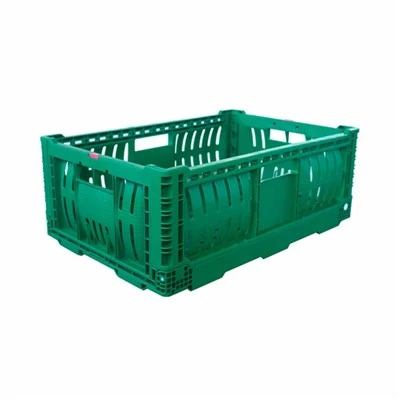
Industrial Plastic Containers | Heavy-Duty Material Handling Solutions
Product Assessment & Engineering Standards
Industrial plastic containers replace single-use packaging and fragile metal bins in high-cycle supply chains. Built for automated assembly lines, Tier-1 automotive logistics, and rigorous warehousing environments, these containers withstand continuous mechanical stress, automated conveyor friction, and high-frequency stack loading.
Core Specifications
Standard Footprints: Euro-standard (600x400 mm, 400x300 mm), Automotive VDA-KLT standards, and US standard imperial sizes.
Resin Grades: 100% virgin High-Density Polyethylene (HDPE) or impact-modified Polypropylene (PP); specialized ESD-safe compounds.
Operating Temperature Range: -20 deg C to +60 deg C (Standard); up to +90 deg C (High-Temp formulations).
Load Rating Metrics: Tested per ISO 8611 / ASTM D1185 protocols.
Product Selection Matrix
Select container variants based on operational load profiles, handling systems, and regulatory environments.
|
Series |
Primary Application |
Material Options |
Max Stack Load |
Key Feature |
|
HD-Stack Series |
Heavy parts storage & manual picking |
Virgin HDPE / PP Copolymer |
500 kg |
Reinforced corner columns, ribbed base |
|
AS/RS Auto-Tote |
Automated miniload & conveyor systems |
PP Copolymer (Anti-warp) |
150 kg |
Smooth flat base, deflection <2 mm |
|
ESD Safe Line |
Electronics assembly & PCB transport |
Carbon-loaded Conductive PP |
250 kg |
Surface resistivity $10^4$ to $10^6$ ohm/sq |
|
Foldable Bulk Box |
Returnable dunnage & automotive freight |
Structural Foam HDPE |
1000 kg |
3:1 collapse ratio, drop-down doors |
Application & Operational Fit
Automated Assembly Lines (KLT Integration)
Dimensional Tolerance: Injection molded under controlled thermal cycles to maintain +/-0.5 mm dimensional stability, preventing jams in automated roller conveyors and robotic pick-and-place cells.
Ergonomics: Integrated label holders, barcode recessed areas, and dedicated gripping slots for manual or automated handling.
Cold Storage & Food Processing
Hygiene & Compliance: FDA-compliant resin formulations with smooth interior walls and minimal ribbing to eliminate bacterial entrapment zones. Cleanable via industrial steam washing up to +95 deg C.
Low-Temperature Impact Resistance: Maintains Charpy impact strength at sub-zero temperatures without micro-fracturing.
Electronics & Cleanroom Manufacturing
Electrostatic Discharge Control: Permanent conductive carbon additive prevents static charge accumulation, protecting sensitive semiconductors and printed circuit assemblies during transport.
Manufacturing, Quality Control & Material Verification
Material Formulation
Virgin vs. Regrind Control: Primary production utilizes virgin polymer sourced directly from petrochemical refineries. Regrind material is strictly segregated and restricted to non-structural inner layers in co-injection molded tiers only upon client specification.
UV Stabilizers: Hindered Amine Light Stabilizers (HALS) blended into resin matrix for outdoor staging yards.
Production & Processing
Injection Molding Machinery: Clamping forces ranging from 800 to 3,000 tons, ensuring uniform wall thickness and eliminating internal stress concentrations.
Mould Temperature Control: Multi-zone thermal mold regulation prevents differential cooling shrinkage and container wall warping.
Quality Assurance & Testing Protocol
Corner Drop Test: Dropped loaded at corners from 1.5 meters at -20 deg C to verify impact resistance.
Compression Test: Universal testing machines apply continuous vertical stack loads up to 3x rated capacity for 24 hours to measure creep deflection.
Melt Flow Index (MFI) & Density Testing: Performed per batch to verify raw resin consistency.
Certifications
ISO 9001: 2015 Quality Management System certified.
ISO 14001: 2015 Environmental Management System.
FDA / EU 10/2011 compliance documentation available for food-contact grades.
IEC 61340-5-1 compliance test reports for ESD container lines.
Procurement Decision Guide for Engineers & Buyers
When auditing suppliers for industrial plastic containers, evaluate the following operational risk factors:
Wall Thickness Uniformity: Inspect container cross-sections. Inconsistent wall thickness causes premature structural failure under dynamic stacking loads.
Resin Traceability: Demand Certificate of Analysis (CoA) confirming virgin resin percentage to avoid brittle failure caused by degraded recycled polymers.
Tooling Ownership: Confirm proprietary mold ownership or multi-cavity tool longevity to guarantee supply chain continuity for long-term fleet standardization.
Customization Capability: Verify capacity for laser etching, RFID tag embedding, custom pantone coloring, and embossed corporate logos for asset loss prevention.
Request a Quote / Technical Consultation
To initiate a formal quotation, sample evaluation, or engineering review for custom container specifications, provide the following parameters to our technical sales engineering team:
Target Outer Dimensions (Length x Width x Height)
Required Unit Load Capacity (Single unit & maximum stack load)
Environmental Constraints (Operating temperature, chemical exposure, ESD requirements)
Estimated Annual Volume & Delivery Schedule
[Request Engineering Quote & Sample Evaluation]
FAQ
Q: What is the maximum static and dynamic load capacity difference?
A: Static load refers to the maximum weight applied to the bottom container when stationary in a static stack. Dynamic load refers to the maximum weight the container can support while transported on a forklift or conveyor system. Dynamic ratings are typically lower due to vibration and inertial forces. Refer to individual product data sheets for specific ratings.
Q: Can container colors and corporate branding be customized?
A: Yes. For minimum order quantities (MOQs) starting at 500 units per SKU, containers can be injection-molded in custom Pantone colors. Permanent hot-stamp logo printing, molded-in relief text, and RFID asset-tracking tag integration are available.
Q: How do ESD-safe containers differ from standard plastic bins?
A: Standard HDPE/PP containers are electrical insulators that accumulate static charges. ESD containers incorporate conductive carbon or permanent antistatic additives, yielding a surface resistivity between 10^4 and 10^9 ohm/sq, safely dissipating electrostatic charges away from sensitive electronic components.
Q: What is the standard lead time for bulk volume orders?
A: Standard catalog items in standard colors ship within 2 to 3 weeks. Custom tooling, color matching, or specialized resin formulations typically require 6 to 8 weeks from drawing approval to initial container delivery.
Hot Tags: industrial plastic container, China industrial plastic container manufacturers, suppliers, factory